We obsess over the denial, the delay, and the error. But what if the real problem started several steps earlier?
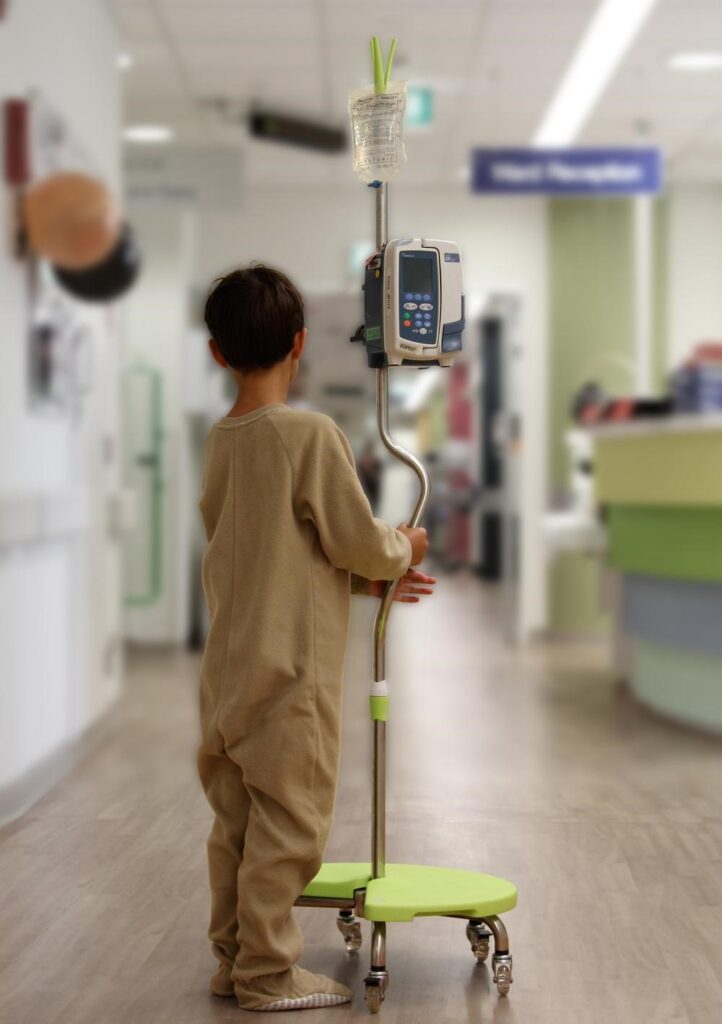
“Patient safety must be written into NCD policies, strategies, and programmes, and not added to them afterwards.” — Dr. Nilesh Buddha, Officer-in-Charge, WHO South-East Asia
Today is World Patient Safety Day.
The WHO’s 2026 campaign is built around a deceptively simple idea: “Safe care for life.” This year’s focus is safe care for noncommunicable diseases, emphasizing the risks that emerge when patients move through complex, continuous healthcare journeys.
That timing makes a recent story from the United Kingdom particularly difficult to ignore.
Because sometimes the most important healthcare story isn’t about a new drug.
It isn’t about artificial intelligence.
It isn’t about a billion-dollar acquisition.
It isn’t even about a breakthrough procedure.
Sometimes it is about a nine-year-old boy.
His name is Qasim Rizwan.
And his story exposes something healthcare doesn’t like to talk about:
The patient sees the outcome.
The patient rarely sees the system that produced it.
Qasim Rizwan needed blood. Lots of it. And almost nobody had it.
In June 2025, when Qasim was eight years old, something frightening happened.
He had been a healthy, energetic child.
He loved sports.
He rode his bike.
Then his mother, Mahnaz Nazar, noticed that his eyes and skin had turned yellow.
His heart rate was high.
He became breathless simply talking.
His condition deteriorated rapidly.
Doctors eventually diagnosed autoimmune haemolytic anaemia, a condition in which the immune system attacks and destroys red blood cells.
But there was another problem.
Qasim’s blood was extraordinarily rare.
His blood included r’r’, a subtype of the Rhesus blood system shared by roughly one in 10,000 people.
Only around 50 NHSBT donors have that blood type.
Finding blood for Qasim was therefore not a matter of opening a refrigerator and grabbing a bag.
The healthcare system had to find the right blood.
And it had to find it quickly.
NHS Blood and Transplant urgently released all six matching frozen units from its National Frozen Blood Bank in Liverpool.
Another matching unit came from Colindale.
A rare donor was specifically called upon to donate.
And one of the frozen units Qasim received had been donated only eight days after he was born.
The blood was, in effect, the same age as the child receiving it.
The logistics behind that sentence are extraordinary.
A donor gave blood years earlier.
Someone tested and classified it.
Someone stored it.
Someone maintained the infrastructure required to preserve it.
Someone knew where it was.
Someone recognized that Qasim needed a rare match.
Someone located the units.
Someone released them.
Someone transported them.
Someone administered them.
And someone monitored the child.
The patient sees one thing:
“I received blood.”
The system sees dozens of interconnected actions.
That difference is the entire point of this article.
Then Qasim discovered something most patients never see
Qasim later visited NHS Blood and Transplant in Liverpool with his father, Rizwan Ahmed, and his brother, Yusuf.
He met some of the people involved in the process.
Including Joanne Mathews, National Frozen Blood Bank Manager.
And suddenly the invisible became visible.
Qasim saw the scientists.
The specialists.
The laboratories.
The blood storage.
The operational teams.
The people who worked behind the scenes.
He reportedly said he hadn’t realized that “everybody did this in the background.”
That sentence may be one of the most revealing lines in the entire story.
Because that is how good infrastructure works.
It hides itself.
The patient doesn’t see the database.
The patient doesn’t see the logistics.
The patient doesn’t see the coordination.
The patient doesn’t see the information exchange.
The patient sees:
Care.
And when the infrastructure fails, the patient suddenly sees all of it.
The missed appointment.
The missing authorization.
The unavailable medication.
The duplicate test.
The delayed referral.
The unpaid claim.
The phone call.
The hold music.
Oh yes.
The hold music.
Healthcare has somehow turned waiting on hold into a recurring clinical experience.
Here is my contrarian argument
We often describe healthcare problems according to where they become visible.
That may be the wrong way to understand them.
A claim gets denied.
So we call it a billing problem.
A patient can’t get scheduled.
We call it a scheduling problem.
An authorization is missing.
We call it a prior-authorization problem.
A chart is incomplete.
We call it a documentation problem.
A referral disappears.
We call it a referral problem.
But what if these aren’t separate problems?
What if they are symptoms of something deeper?
Information friction.
Information exists.
But it is incomplete.
Or late.
Or inconsistent.
Or trapped in another system.
Or interpreted differently by different people.
Or available to one department but invisible to another.
That is where things get expensive.
The denial is often the crime scene, not the crime
This is the idea I want to challenge.
A denial happens at the end of the revenue cycle.
But the cause may have appeared much earlier.
Consider a simple example.
A claim is denied because authorization was missing.
The billing department sees the denial.
But when did the problem actually begin?
Maybe scheduling didn’t know authorization was required.
Maybe eligibility information was incomplete.
Maybe the payer requirement changed.
Maybe nobody owned the task.
Maybe the authorization was obtained but not documented correctly.
Maybe the information existed but never reached the billing team.
Maybe the physician assumed the administrative team had handled it.
Maybe the administrative team assumed the payer information was already known.
Maybe everyone did their job.
And the system still failed.
That is the uncomfortable possibility.
You can have competent people operating inside a bad workflow and still produce bad outcomes.
Healthcare loves fixing symptoms
This is where things get interesting.
Healthcare is incredibly good at fixing things after they break.
Denied claim?
Work it.
Rejected claim?
Correct it.
Missing information?
Call someone.
Wrong code?
Change it.
Missing authorization?
Appeal.
Incorrect demographic information?
Fix it.
Wrong payer?
Resubmit.
We have built sophisticated machinery around rework.
And then we call it efficiency.
Sometimes it is.
Sometimes it is just organized exhaustion.
The hidden tax nobody puts on the invoice
Every piece of rework costs something.
A staff member’s time.
A physician’s attention.
A patient’s patience.
A phone call.
An email.
A portal login.
A spreadsheet.
A follow-up.
Another follow-up.
Another follow-up.
And eventually:
“Did anyone ever hear back from them?”
This is the hidden tax of healthcare administration.
It rarely appears as a single line item.
But it accumulates.
One unnecessary touch.
Then another.
Then another.
Across thousands of encounters, those little frictions become a very large operational problem.
The physician’s job description has quietly expanded
There was a time when a physician’s primary administrative burden was documentation.
Now the modern physician may also be expected to understand:
EHR workflows.
Prior authorization.
Payer rules.
Coding.
Quality reporting.
Patient messaging.
Referral management.
Credentialing.
Compliance.
Revenue-cycle performance.
And, increasingly:
Artificial intelligence.
At some point, someone should ask a simple question.
When exactly does the physician get to be a physician?
I’m not suggesting physicians should ignore the business side of medicine.
Quite the opposite.
Physician-owners need to understand their economics.
But understanding the revenue cycle is different from personally becoming the operating system for the revenue cycle.
The industry’s favorite solution: another dashboard
Healthcare technology has a funny habit.
We identify a problem.
Then we build a dashboard.
Problem still exists?
Build another dashboard.
Now we have two dashboards.
Still not solved?
Add an alert.
Now we have two dashboards and 47 alerts.
Eventually someone announces:
“We are leveraging AI to optimize the workflow.”
And the office manager quietly asks:
“Which login is that again?”
This is not an argument against technology.
It is an argument against technology that creates additional work in the name of reducing work.
AI has an uncomfortable job description
The question is no longer:
Can AI do something?
AI can do many things.
The better question is:
Can AI remove work without creating new work?
That is a much higher bar.
A physician should not have to:
- Leave the EHR.
- Open another application.
- Copy information.
- Paste information.
- Review an enormous AI-generated response.
- Correct it.
- Copy it back.
- Document what happened.
- Then answer an alert about the process.
That isn’t automation.
That’s administrative musical chairs.
Recent physician commentary in Healthcare IT News makes essentially this point: AI creates less value when clinicians must leave their normal workflow, manually move information, or adapt their established processes around the technology. Dr. R. Ryan Sadeghian described this as an “invisibility factor,” arguing that physicians should experience less work rather than another technology layer to manage.
That is a useful standard.
Not:
How impressive is the AI?
But:
How much unnecessary work disappeared?
The future of healthcare AI may be boring
And that is a compliment.
The best AI may eventually become so integrated that nobody talks about it.
No dramatic interface.
No futuristic dashboard.
No giant “AI” button.
No 17-step workflow.
The system notices something.
The system understands the context.
The system helps.
The human remains accountable.
And the work continues.
That’s it.
Boring?
Perhaps.
Useful?
Much more important.
Qasim’s story is actually a story about coordination
Look carefully at what happened to Qasim.
It wasn’t one technology.
It wasn’t one department.
It wasn’t one person.
It was a network.
Blood typing.
Specialist testing.
Molecular diagnostics.
Blood storage.
Rare donor coordination.
Hospital services.
Transportation.
Clinical care.
The right resource had to reach the right patient at the right time.
That sounds remarkably similar to the healthcare workflows physicians deal with every day.
Different problem.
Same structural principle.
Healthcare outcomes depend on what happens between the obvious moments.
And that is where medical billing becomes interesting
Medical billing is often treated as a back-office function.
Something that happens after medicine.
I think that framing is too simplistic.
The revenue cycle begins much earlier.
Patient registration affects downstream data.
Scheduling affects workflow.
Eligibility affects financial expectations.
Authorization affects whether a service can proceed appropriately.
Documentation affects coding.
Coding affects claims.
Charge capture affects what enters the revenue cycle.
Claim submission affects payment.
Payment affects reconciliation.
Reconciliation affects the practice’s understanding of what actually happened.
The pieces are connected.
Yet many healthcare organizations manage them as if they aren’t.
The revenue cycle isn’t really a cycle
Here is another provocative thought.
We call it a revenue cycle.
But operationally, it behaves more like a chain of handoffs.
And every handoff is an opportunity for ambiguity.
Information changes hands.
Responsibility changes hands.
Systems change.
People change.
Interpretation changes.
The patient remains the same.
The encounter remains the same.
But the information about that encounter can become progressively distorted.
That is where technology should become interesting.
Not because AI is fashionable.
Because information becomes difficult to manage at scale.
The ONNX thesis
This is the problem I am exploring with OnnX.
The goal isn’t to create another layer of technology.
The goal is to explore whether technology can help reduce the friction created by fragmented information and workflows across the healthcare revenue cycle.
The conceptual workflow is straightforward:
Patient Registration → Scheduling → Eligibility → Authorization → Encounter → Documentation → Coding → Charge Capture → Claim Submission → Payer Processing → Payment → Reconciliation
The important word is not “AI.”
It is connection.
Where does information originate?
Where does it go?
Where does it disappear?
Where does someone reinterpret it?
Where does someone have to manually verify it?
Where does a small ambiguity become a large financial problem?
Those questions are more interesting to me than simply asking:
“What can we automate?”
The most expensive problem may be ambiguity
Think about ambiguity as a form of operational debt.
Someone isn’t sure what happened.
So they ask.
Someone else isn’t sure.
So they check.
Someone else interprets the information differently.
So another person verifies it.
Eventually the ambiguity becomes:
a denial.
Or:
a delay.
Or:
rework.
Or:
an unhappy patient.
Or:
a frustrated physician.
The original ambiguity may have taken 30 seconds to create.
The organization may spend hours dealing with its consequences.
That is a terrible trade.
Stop measuring only the outcome
Most organizations measure:
Denial rate.
A/R.
Days in A/R.
Clean claim rate.
Payment rate.
Those metrics matter.
But they are lagging indicators.
What about leading indicators?
How many manual handoffs occur?
How often is information entered twice?
How often does a staff member leave one system to find information in another?
How often is an authorization question discovered after the encounter?
How often does a coder have to chase documentation?
How often does billing ask clinical staff for clarification?
How many times does the same question get answered by different people?
Those are workflow metrics.
And they may tell you something the denial report cannot.
Try this experiment before buying another platform
Take 25 recent denials.
Don’t start by fixing them.
Start by tracing them backward.
Ask:
Where did the problem first appear?
Not:
Where was the problem discovered?
Those are different questions.
If the denial was caused by missing authorization, trace the authorization process.
If documentation was insufficient, trace the documentation workflow.
If eligibility was incorrect, trace registration and verification.
If coding was inconsistent, trace how the relevant clinical information reached coding.
You may discover that the billing department wasn’t the beginning of the problem.
It was simply the place where the problem became visible.
The 30-day friction experiment
Week 1: Observe
Don’t redesign anything.
Watch.
Follow five to ten claims from beginning to end.
Document every handoff.
Every system.
Every manual touch.
Every clarification.
Week 2: Categorize
Put the friction into buckets:
Missing information
Duplicate information
Late information
Ambiguous information
Wrong information
Information trapped in another system
This categorization alone can be surprisingly revealing.
Week 3: Fix one thing
Not ten things.
One.
Choose the problem with the clearest recurring pattern.
Clarify ownership.
Standardize the information.
Remove a handoff.
Improve visibility.
Only then consider automation.
Week 4: Measure
Compare:
Denials.
Rework hours.
Manual touches.
Time to resolution.
A/R.
Staff interruptions.
And ask:
Did the problem actually become smaller?
If not, don’t blame the staff.
Question the design.
Three questions I would ask every practice owner
1. What does your staff repeatedly fix?
This identifies rework.
2. What problem do you discover too late?
This identifies visibility gaps.
3. What information do three different people interpret three different ways?
This identifies ambiguity.
Those three questions can reveal more than another software demonstration.
What I would not automate
There is an important caveat.
Not everything should be automated.
Clinical judgment should remain human-centered.
Compliance decisions require appropriate oversight.
Sensitive patient communications require care.
Coding assistance does not eliminate professional responsibility.
AI output requires validation where errors could materially affect patients, claims, compliance, or finances.
And healthcare organizations need appropriate privacy, security, access, and governance controls.
The goal isn’t:
maximum automation.
The goal is:
minimum unnecessary friction.
There is also an ethical question
If technology makes healthcare more efficient, efficient for whom?
That question matters.
If a billing platform saves the payer money but creates more work for physicians, is that progress?
If AI saves a staff member five minutes but forces the physician to review another screen, is that progress?
If automation improves an internal metric but makes the patient experience worse, is that success?
Efficiency is not automatically good.
The direction of the efficiency matters.
Technology should ideally move work away from unnecessary administrative burden and toward the people and activities that actually require human judgment.
What Qasim’s story teaches healthcare operators
Qasim’s story isn’t really about blood.
It is about the chain behind the blood.
The donor.
The testing.
The classification.
The storage.
The inventory.
The matching.
The communication.
The transportation.
The hospital.
The clinical team.
The timing.
Break one critical link and the outcome can change.
Healthcare organizations face the same structural reality every day.
The difference is that most workflow failures don’t make the news.
They simply create another phone call.
Another denied claim.
Another delayed payment.
Another frustrated employee.
Another physician staying late.
The invisible workforce deserves more attention
Qasim met people who worked behind the scenes.
They weren’t standing beside him when he was sick.
But they mattered.
The same is true in physician practices.
There are people working behind the scenes every day to keep healthcare moving.
Schedulers.
Eligibility specialists.
Prior authorization staff.
Coders.
Billers.
Revenue-cycle managers.
Practice administrators.
Credentialing teams.
Compliance staff.
IT teams.
They keep the system alive.
The problem isn’t that these people aren’t working hard enough.
Sometimes the system is simply asking them to compensate for its own weaknesses.
That is an important distinction.
Don’t automate the people before you fix the process.
A better question for healthcare technology companies
Don’t ask:
“How much AI can we add?”
Ask:
“How much unnecessary work can we remove?”
Don’t ask:
“How many features can we launch?”
Ask:
“How many handoffs can we simplify?”
Don’t ask:
“How many claims can we process?”
Ask:
“How many claims can move through the system without someone having to rescue them?”
Don’t ask:
“How intelligent is the platform?”
Ask:
“How much easier is the work?”
That is a different philosophy.
The physician should not become the integration layer
This may be the most important sentence in the entire article.
The physician should not become the integration layer between broken healthcare systems.
The physician should not have to translate information from one system into another.
The physician should not have to remember which payer portal requires which workflow.
The physician should not have to become an expert in every administrative exception.
The physician should practice medicine.
The organization should build infrastructure that supports that work.
And perhaps that is the real AI opportunity
AI is very good at finding patterns.
Healthcare is full of patterns.
Repeated denials.
Repeated missing information.
Repeated delays.
Repeated documentation gaps.
Repeated payer questions.
Repeated workflow failures.
The opportunity is not necessarily to replace the person doing the work.
It may be to see the pattern before the problem becomes expensive.
That is much more interesting.
Imagine a system that doesn’t merely tell you:
“This claim was denied.”
But helps answer:
“Why does this keep happening?”
Better yet:
“Where in the workflow did this pattern begin?”
And eventually:
“What can we change so it happens less often?”
That is where intelligence becomes operationally useful.
The future may belong to prevention
Healthcare has historically been very good at reactive workflows.
Something happens.
Someone responds.
The future opportunity may be more predictive.
Something is beginning to go wrong.
The system recognizes the pattern.
Someone gets notified.
The problem is addressed before it becomes expensive.
That’s the difference between:
revenue recovery
and
revenue prevention.
One repairs.
The other redesigns.
Final Thoughts
Qasim Rizwan’s story began with something terrifying.
A healthy eight-year-old became critically ill.
His family needed answers.
His doctors needed options.
And the healthcare system needed to coordinate an extraordinarily difficult response.
What saved him wasn’t one person.
It was a network.
A network of people, information, expertise, inventory, technology, logistics, and timing.
That is healthcare.
We just don’t usually see it.
And perhaps that’s the lesson for medical billing too.
The denial is visible.
The friction that created it often isn’t.
The claim is visible.
The ambiguity that damaged it often isn’t.
The A/R balance is visible.
The workflow that created it often isn’t.
So perhaps we should stop asking only:
“How do we fix the denial?”
And start asking:
“Why did the system allow the denial to happen in the first place?”
That question is harder.
It is also more interesting.
And potentially much more valuable.
Three ideas worth remembering
The problem you see may not be where the problem began.
AI should remove work—not create another place to do work.
The best healthcare infrastructure is often invisible until you need it.
Continue the Conversation
Healthcare doesn’t need another technology conversation simply celebrating how intelligent machines have become.
It needs a more difficult conversation:
What unnecessary work are we willing to eliminate?
What is the most frustrating administrative task in your practice?
What problem keeps coming back?
What does your staff repeatedly have to fix?
And what have you simply accepted as “the way healthcare works”?
Leave a comment.
Share this article with a physician, practice owner, administrator, or revenue-cycle leader who has experienced this firsthand.
I would especially like to hear from people working inside the workflow every day.
Because the people closest to the friction often understand the problem better than the people selling the solution.
Free Resource
For physicians and clinic owners interested in going deeper, check the Featured section of my LinkedIn profile for a free resource.
No signup required.
The goal is simple:
Find the friction before you build the technology.
About the Author
Dr. Daniel Cham is a physician, medical consultant, and healthcare entrepreneur focused on the intersection of medical technology, healthcare operations, medical billing, and physician practice management.
He is the founder of OnnX, an AI-powered healthcare revenue-cycle and medical-billing infrastructure concept focused on exploring how technology can reduce administrative friction for small and medium-sized physician practices.
His current focus is customer discovery and validation—understanding the problems physicians, clinic owners, administrators, and revenue-cycle teams actually experience before building technology around them.
Connect with Dr. Cham on LinkedIn.
Disclaimer
This article is for general informational and educational purposes only. It does not constitute medical, legal, compliance, accounting, financial, or other professional advice.
Healthcare organizations should obtain appropriate professional advice regarding their specific regulatory, contractual, privacy, security, billing, coding, and compliance obligations.
Sources
NHS Blood and Transplant — “Qasim and all the rare blood”
The primary source for Qasim Rizwan’s story, including the rare blood matching, NHSBT teams, family, and clinical response. NHS Blood and Transplant
World Health Organization — World Patient Safety Day 2026
The WHO’s September 17, 2026 campaign focuses on safe care across the continuum and the complexity of continuous healthcare interactions. WHO World Patient Safety Day 2026
Dr. Nilesh Buddha — WHO South-East Asia, September 17, 2026
Today’s WHO statement emphasizes coordinated, continuous care and the need to build safety into healthcare systems rather than adding it afterward. WHO South-East Asia statement
Healthcare IT News — “Physicians say AI works best when it disappears,” September 16, 2026
Recent physician commentary reinforces the idea that AI should reduce work and fit into existing workflows rather than become another destination clinicians must manage. Healthcare IT News
Knowledge drives progress. Start the next conversation.
The future of healthcare won’t be defined only by what technology can do.
It will be defined by what unnecessary work technology can make disappear.
The goal isn’t more technology. It’s less friction.
#Healthcare #MedicalBilling #RevenueCycleManagement #HealthcareInnovation #HealthcareTechnology #AIinHealthcare #HealthcareAI #PhysicianPractice #PracticeManagement #HealthcareOperations #PhysicianEntrepreneur #MedicalCoding #HealthTech #DigitalHealth #PatientSafety #PhysicianLeadership #ClinicOwners #IndependentPractice #HealthcareManagement
Leave a Reply